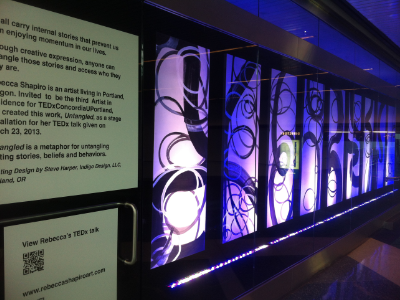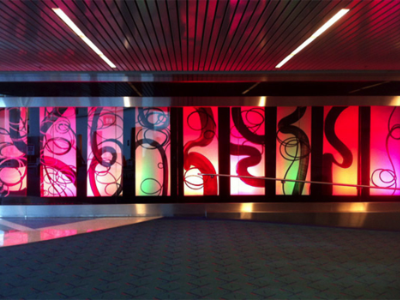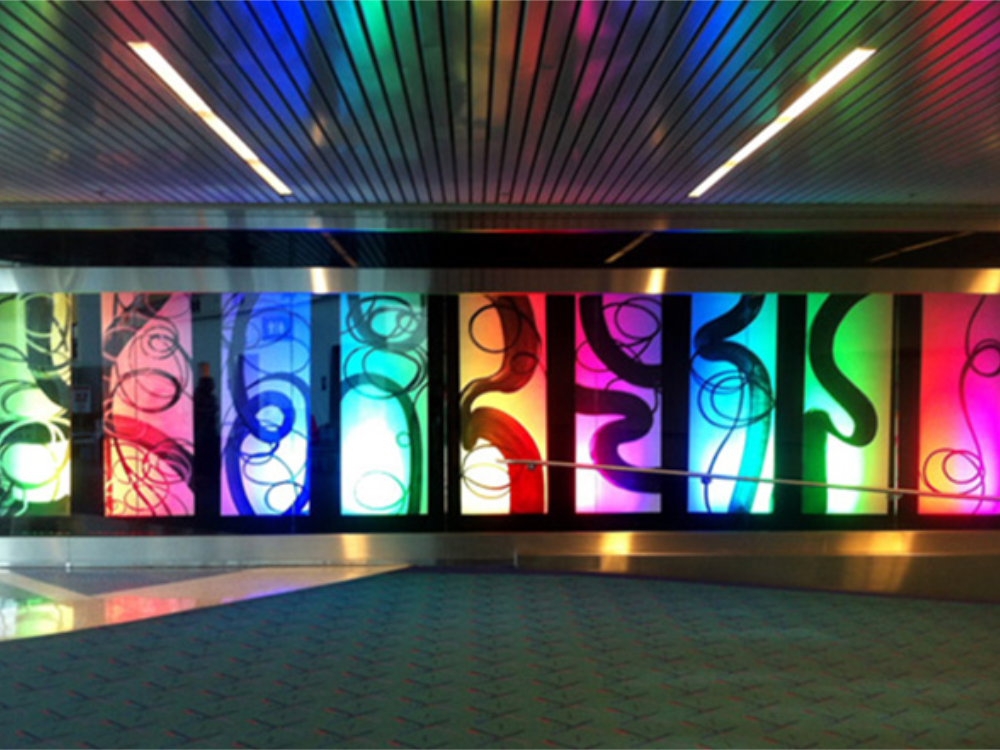
Nine hollow-core doors turned canvas, suspended mid-air and lit with LED color that shifted every minute on a computer program – technology new enough at the time that the panels stayed vivid even in daylight. Untangled was my answer to a single prompt: velocity.
To me, velocity is speed and direction – whether life is flowing or snagged on something. That year I kept finding knots: stories, beliefs, and behaviors I’d carried so long I’d mistaken them for truth. Painting the panels became a way of tracing those tangles into the open. I’d sit with a blank panel until my mind quieted down enough to feel where I was restricted – usually the calves, the hips, the throat – then wait for the impulse to make a mark before I moved.
I built the piece to ask something of whoever stood in front of it. Not to explain the knot, just to find it – to notice what’s binding you and follow the line back to where it started. Once you locate it, you can decide whether to keep carrying it.
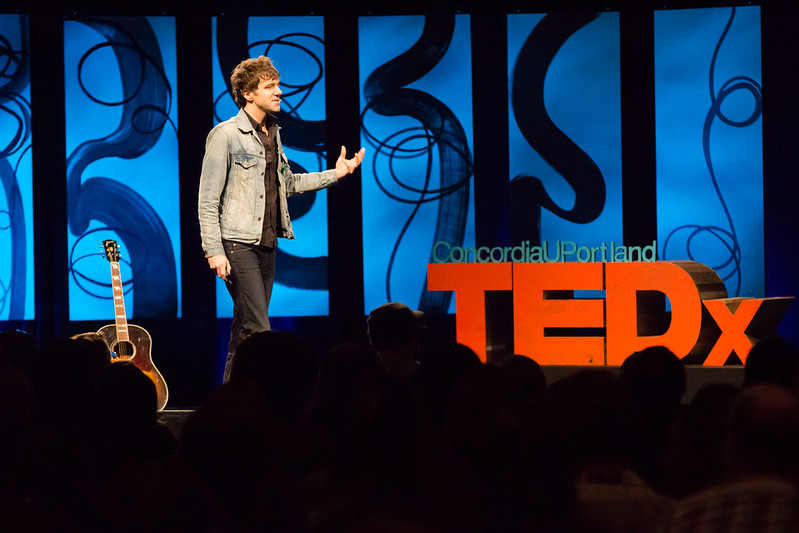
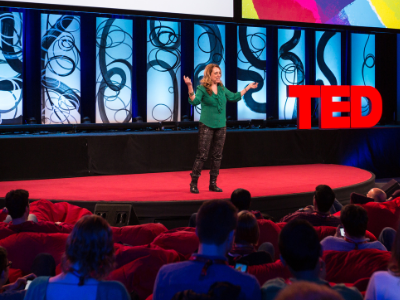
Untangled began on the TEDxConcordiaUPortland stage (2013), then hung for a year in the Portland International Airport (2013-2014), then traveled to TEDActive in Whistler (2015), where I served as artist in residence. At PDX, strangers started conversations in front of the piece – I later heard from people who’d met there and stayed in touch. That’s part of why I keep coming back to temporary installation work: you have to be there. What’s left afterward is what people tell each other about it, and that’s closer to how myth works.